The skills used for combat have been around at least as long as our species and almost certainly predates Homo Sapiens. The skills of fighting other humans grew side by side with the skills used for hunting. Ötzi was killed by someone with archery skills around 3230 BC and his body froze into a natural mummy in the Alps. He was far from the first human killed by another, but the question arises as to when the combative skills were developed into a science and passed on as a style of martial art.
It is extremely hard to pinpoint a precise date for this. One of the oldest traditions is that of Bodidharma who was a 5th or 6th C Buddhist monk who brought Zen Buddhism to China, and who was credited with bringing some early form of martial arts with him to strengthen the body, mind, and spirit of the monks he taught. The actual truth of that story may never be fully known, but it serves as a legendary starting point for systematized martial arts in the Orient. It also shows that the concept of martial training being used to develop the mind and spirit, which helped to create more highly skilled martial artists, was quite an old concept.
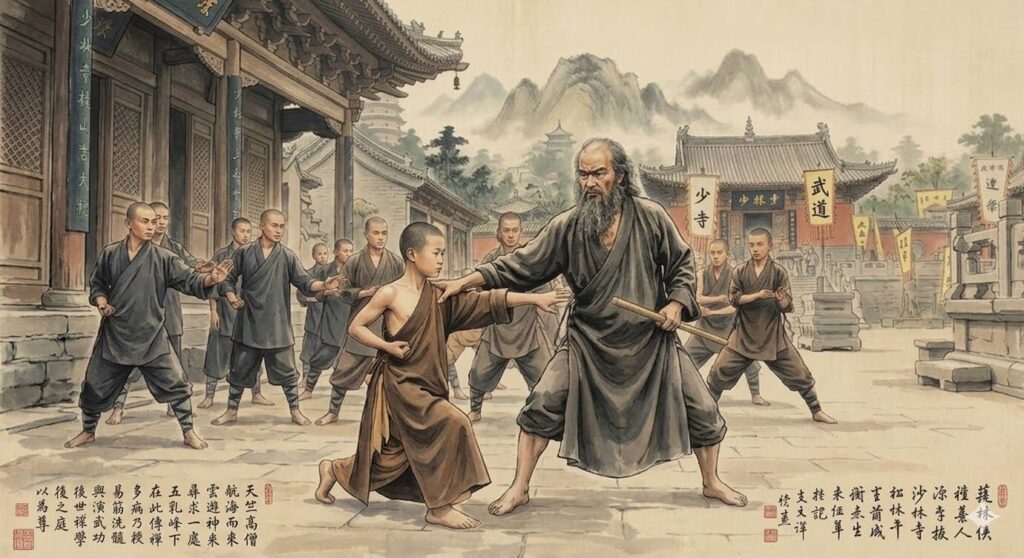
Actually this story about Bodidharama is probably apocryphal, and dates to the 17th C. There were martial arts practiced in China before the 5th C, but this story about Bodidharma became popular and is often cited in modern martial arts circles. The monks at Shaolin Temple may have already been practicing martial arts before Bodidharma arrived, so he may not have been the originator of Shaolin martial arts. It is documented that Shaolin monks successfully took part in battles in 8th C. The Shaolin Temple had a big influence upon the martial arts in China, and those Chinese martial arts had a big influence upon the martial arts of the rest of the orient.
There were other martial arts practiced in China before the Shaolin Temple was built, but the Shaolin martial arts represent a structured teaching environment that can be thought of as a martial arts university. This was probably one of the biggest contributions the Shaolin monks made to martial arts: passing arts on in a structured manner from master to student. Also the Shaolin Temple is a clear example of martial arts including mental training in the curriculum through meditation to help strengthen the spirit. This combination of training the body, mind, and spirit would spread throughout the martial arts of the Orient.
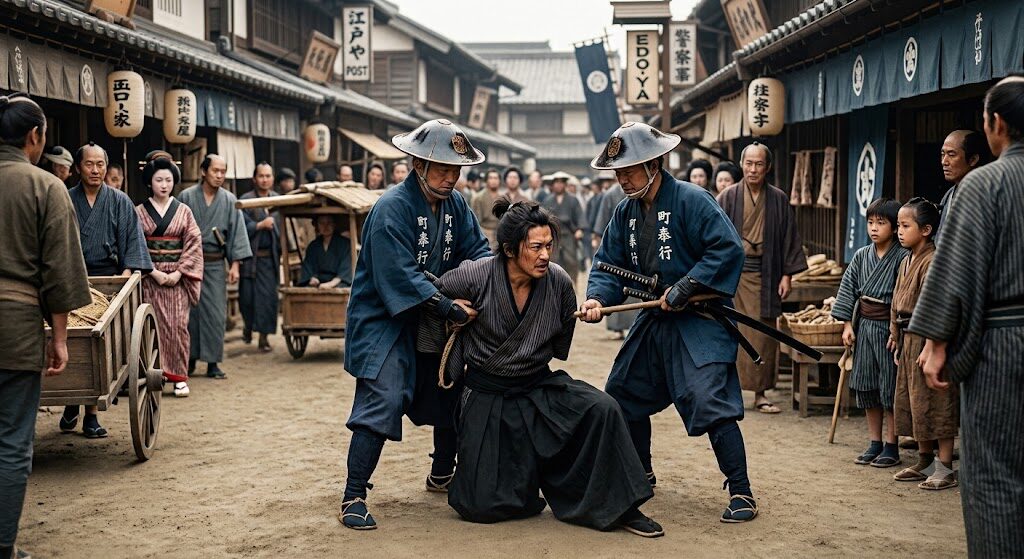
The evolution of martial arts was naturally affected by the changing times. The more violent the era the more emphasis was paced on martial skills, but the more peaceful an era the more likely martial arts ceased development and focused on passing on the older skills. This can be seen clearly in Japan where regular periods of upheaval led to an era of nearly constant warfare up until 1615. 250 years of peace followed during which time the emphasis shifted toward non-fatal techniques and unarmed Jūjutsu rose in prominence. The Edo police used Jūjutsu skills to subdue violent sword wielding Samurai to prevent unnecessary bloodshed. This peaceful era was free from major battles, but the need for fighting skills was in high demand and unarmed skills actually rose to new heights due to the pressure to end violent confrontations without the fatal use of weapons.
Many of the sword styles of the Samurai also went through development during this period. While there were no major battles, there were often incidents of sword dueling. Such scenarios are now famous in many films about the samurai. The shift in martial arts was away from fighting in armor against armored opponents to fighting in everyday clothing. This meant that the movements became focused on quicker cuts and a rise in the importance of Iaijutsu or sword drawing techniques. Swords became shorter and lighter to accommodate the demand for speed. This put a lot of pressure on the police who used Jūjutsu to subdue these often drunk troublemakers. So while the normal development during repeated battles was not in effect, there was still a big demand for high degrees of martial skill, and the samurai passed on these skills to subsequent generations.
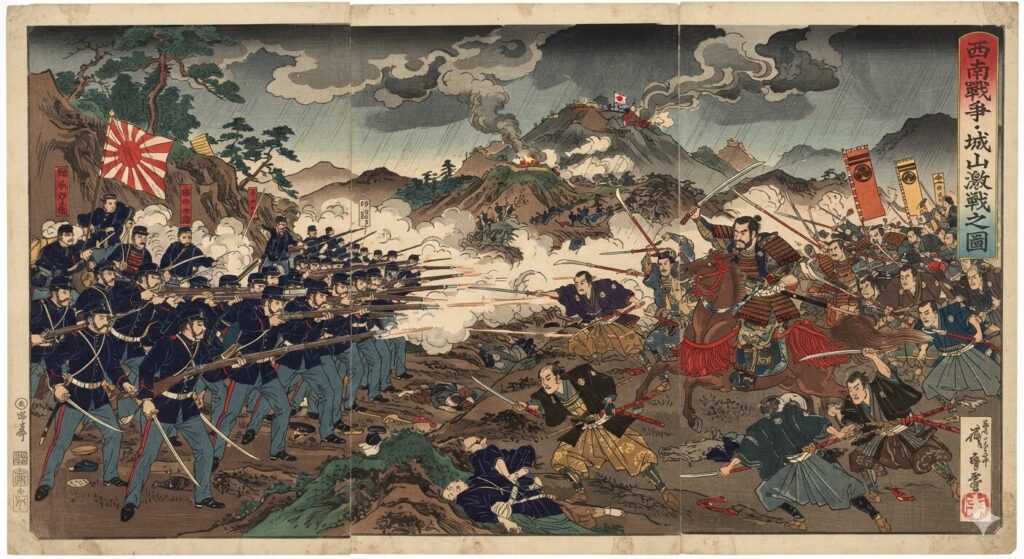
The situation came to an end in the late 1800’s. After the Meiji restoration and the Boshin War (1868-1869) the Japanese created a more Western style modern government to replace the Shōgun. Former Samurai were banned from wearing swords, and this led to some revolts culminating in the Satsuma Rebellion when the last of the Samurai armies was defeated with modern guns.
As Japan rushed to modernize its military, many of the Samurai families tired to pass on their martial traditions as they always had: within their families. Also many former Samurai pursued careers as soldiers in the modern military. What this meant is that many young former Samurai men died in the wars Japan fought against Russia, China, and the United States. This also means that many of their family martial arts died out. About 90% of Samurai martial arts died out by the end of WWII.
The late 1800’s saw a dramatic change in martial arts. The Samurai class was dissolved and some tried to teach martial arts to the public, but the public had no need for complex warrior skills in a peaceful country. What use were skills fighting with swords and spears in the era of the gun? The public were also not up to the rigorous training required for the Bujutsu. Many felt their time was better spent on academics and getting into a good college and a good paying job. There just wasn’t much time left over for martial arts training for most people.
In order to succeed the former Samurai had to water-down the techniques of Bujutsu to be less violent and place emphasis on sport competitions. The result was that Jūjutsu was watered-down into Jūdō and Kenjutsu was watered-down into Kendō. The modern Budō were created, with Jūdō and Kendō primarily intended for use in training children in martial sports that were safe and less likely to have injuries, which also means that they are less effective for adult self-defense applications. His didn’t matter in early 20th C Japan, because the Budō they were not actually intended for use in life and death scenarios such as self-defense.
The modern martial arts continued to grow in popularity, especially after WWII when American servicemen trained in Budō martial arts in Japan and Okinawa and brought those arts to America. On the other hand, nearly 90% of traditional Bujutsu died out between 1868-1950. The Bujutsu are far less popular today because they don’t have sport applications, and many of the remaining Bujutsu are in endangered status facing the possibility of dying out. The reality is that Bujutsu are much more complex martial arts with more techniques and many weapons, so they are more difficult to master. Many people do not have the ability to stick with the training to reach high levels due to time constraints of work and family, as well as the distracting effect of influence of the modern digital world.
While sport Juijutsu and Jūdō are popular today, there is a real need to foster the traditional samurai martial arts. More awareness is needed of the effectiveness of traditional Bujutsu for actual real-life situations. Many people who have interest in martial arts, and do not want to pursue a sport competition career, are still unaware of the distinctions between traditional Jūjutsu and modern sport Juijitsu/Jūdō. When people gain some knowledge of these martial arts and how they compare, the question becomes easier to answer: do you want to fight in sport competitions and win a trophy? Or, if your primary concern is to keep safe from criminal attack and protect your family, should you discover the more effective older Samurai martial arts and see if those skills will be more useful?
Leave a Reply